 繁
繁
 EN
EN

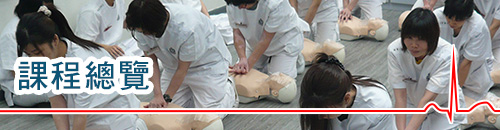
Since 2006, the Hong Kong Society of Professional Medical Care (HKSPMC) has been conducting American Heart Association (AHA) training programs. It is now an AHA-authorized International Training Center (ITC) and operates a Macau Training Site, providing professional education for healthcare personnel and frontline rescuers in both Hong Kong and Macau.
The series of AHA training programs focuses on teaching healthcare professionals and interested members of the public through structured, comprehensive instruction.
Courses Include:
- AHA Basic Life Support (BLS) for Healthcare Providers Course
- AHA Advanced Cardiovascular Life Support (ACLS) Course
- AHA Pediatric Advanced Life Support (PALS) Course
- AHA Heartsaver® CPR AED Course
All AHA courses emphasize small-class teaching, watch-and-learn practice, and teamwork concepts. Through DVD-based instruction and repeated hands-on practice, learners develop standard techniques and understand their roles in coordinated resuscitation efforts. Whether participants are physicians, nurses, or emergency medical technicians, they gain confidence in performing their duties and working with team members during emergencies.
Attending an AHA course organized by HKSPMC is not a stressful experience but an enjoyable and rewarding opportunity to strengthen life-saving skills and emergency knowledge.
2025 American Heart Association (AHA) Basic Life Support (BLS) Guidelines
Key Updates
In 2025, the American Heart Association released the latest CPR and Emergency Care Guidelines, updating recommendations on the assessment and management of patients with cardiac arrest, respiratory arrest, and airway obstruction.
The core elements of adult Basic Life Support now emphasize: early recognition of cardiac arrest, rapid activation of the emergency response system, delivery of high-quality CPR, and use of an AED (Automated External Defibrillator).
The latest guidelines also revise procedures for managing foreign-body airway obstruction.
According to the most recent clinical evidence, the following three updates have the greatest practical impact on resuscitation training and performance:
Revised Foreign-Body Airway Obstruction Procedure
For children and adults with severe airway obstruction (unable to speak or response to make sounds), the new guideline recommends performing five back blows first, followed by five abdominal thrusts (Heimlich maneuver), repeating the sequence until the object is expelled or the patient becomes unresponsive. Research shows that back blows have a higher success rate and are safer.
Updated Infant CPR Technique
The new guidelines recommend using the “one-hand or encircling-hands” method for chest compressions instead of the “two-finger” technique. Studies indicate that these methods provide more stable and sufficient compression depth, thereby improving CPR quality and patient outcomes.
Updated AED Use Instructions
For female patients, routine removal of undergarments is not necessary. Adjusting straps or repositioning clothing is sufficient to ensure proper pad contact with the skin. Research has found no negative effect from leaving on undergarments during AED use; in fact, delays in removing them may hinder timely defibrillation.
These updates are based on sound clinical evidence, improving both the safety and effectiveness of resuscitation for rescuers and patients.
2025 American Heart Association (AHA) Advanced Cardiovascular Life Support (ACLS) Guidelines
Key Updates
Prioritizing Defibrillation and Chest Compressions
For atrial fibrillation, immediate high-energy defibrillation is recommended.
For refractory ventricular fibrillation, providers should maintain continuous high-quality compressions and standard defibrillation practices, without relying on unproven or experimental technologies.
Optimizing Medication Routes and Timing
Intravenous (IV) drug administration is preferred over intraosseous (IO) routes due to superior absorption and circulation. Medication use must match the cardiac rhythm and clinical condition of the patient, and CPR should never be interrupted solely to secure an airway.
Comprehensive Post–Cardiac Arrest Care
After return of spontaneous circulation (ROSC), strict blood pressure and temperature control are essential. Decisions to terminate resuscitation must take into account multiple physiological and clinical indicators, with detailed documentation.
The new guideline also emphasizes rehabilitation and neurological recovery of survivors, along with evaluation for organ donation, forming a robust in-hospital post–resuscitation care system.
These 2025 updates place greater emphasis on clinical evidence, precision decision-making, and a systematic approach to emergency care, offering clear direction for medical education and practice, and enhancing both prehospital and in-hospital resuscitation outcomes.